
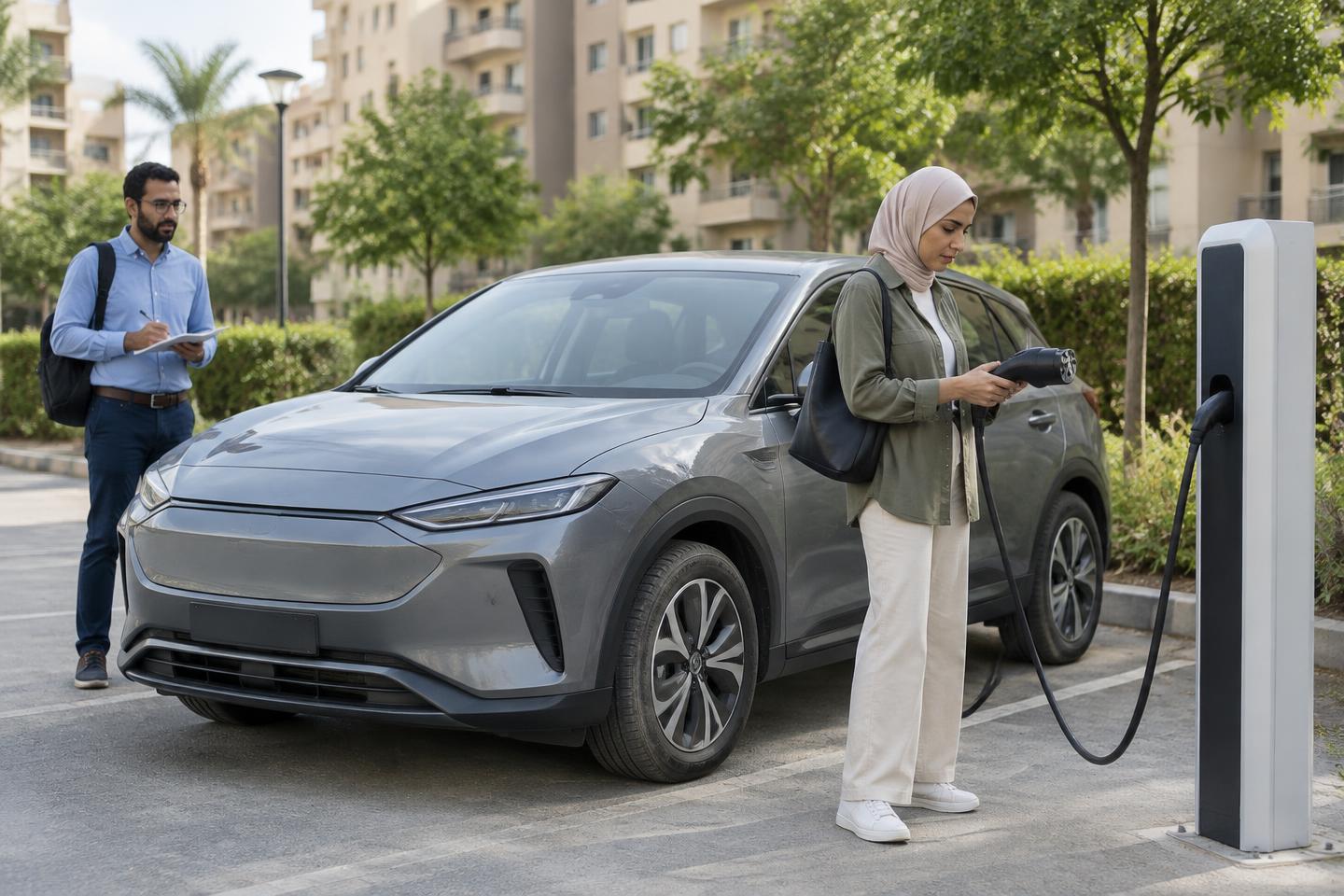
Study the charging decision, not just the car
An attractive electric vehicle can win a buyer's attention without resolving the question that determines ownership: where will I charge it? For automotive brands and charging operators in Egypt, a useful adoption study must connect vehicle appeal to parking access, daily travel and the buyer's confidence in support. General enthusiasm for new technology is not a reliable forecast of purchase.
Start with a specific decision. A manufacturer may need to choose an ownership package; a property developer may need to evaluate shared chargers; an operator may need to prioritize locations. Each requires a different audience and evidence base, even when all three use the phrase EV market research.
Recruit audiences with different charging realities
Include current EV owners, active vehicle intenders and people who considered an EV but rejected it. Within those groups, distinguish private parking from shared or street parking, short commutes from frequent intercity trips, and household use from commercial driving. These conditions often explain more than age alone.
Qualitative interviews can identify practical barriers before a survey measures them. Recruitment should verify relevant ownership or shopping behavior without collecting unnecessary personal documents. Set the quantitative sample around the comparisons the team needs to make; a large overall total cannot rescue tiny parking or journey subgroups.
Measure confidence through realistic scenarios
Present clearly described charging situations: an overnight home charge, a shared residential facility, a workplace option and a public stop on a longer journey. Ask participants to evaluate availability, waiting time, payment clarity and what they would do if the preferred charger were unavailable.
Use current, verified product specifications and tariffs when comparing ownership costs. Label assumptions for annual distance, electricity use and maintenance. Do not promise savings from a hypothetical calculation or imply that a proposed charging site already exists. Separate awareness of charging options from actual experience using them.
Combine stated preferences with observed journeys
A short travel diary can reveal repeated routes, parking duration and trips that make drivers anxious about range. With informed consent, journey information can help identify suitable charging occasions. Report aggregated patterns rather than precise home addresses or identifiable travel traces.
For existing owners, explore recent charging incidents and service recovery, not only satisfaction scores. For intenders, test whether an installation assessment, transparent warranty or charging demonstration changes confidence. These are testable propositions, not evidence that any single offer will guarantee conversion.
Turn findings into an ownership proposition
The final output should show which barriers belong to the vehicle, the charging environment and the sales explanation. Prioritize interventions by audience: home-installation guidance may matter to one group, while reliable shared charging matters to another. Keep survey purchase intention separate from a sales forecast.
Freeminds MENA can help scope an automotive study that combines buyer interviews, structured surveys and ownership journey research. A clear brief specifies the target cities, vehicle segment, decision deadline and ownership scenarios to test, allowing the research design to match the investment decision.